
Malawi
About
Malawi is a landlocked country in southeastern Africa. It is a multiparty democratic republic governed under the 1994 Constitution. Malawi is bordered by Tanzania to the north and northeast, Mozambique to the east, south and southwest, and Zambia to the west. Its capital and largest city is Lilongwe.
Malawi gained independence from Britain on 6 July 1964, having previously been known as the Nyasaland Protectorate. It became a republic on 6 July 1966 under President Hastings Kamuzu Banda and remained under one-party rule for three decades.
In a 1993 referendum, Malawians voted in favour of a multiparty democratic system. The country’s first multiparty elections were held in 1994, bringing Bakili Muluzi to the presidency. Subsequent presidents included Bingu wa Mutharika, Joyce Banda, Peter Mutharika and Lazarus Chakwera.
Peter Mutharika returned to the presidency following the 16 September 2025 presidential election and was sworn in on 4 October 2025.
Malawi covers approximately 118,484 km² and is a landlocked country. It shares borders with Tanzania, Mozambique and Zambia.
Lake Malawi, which occupies a significant portion of the country’s eastern region, is one of Malawi’s defining geographical features. The country has a subtropical climate, with a rainy season generally occurring between November and April and a drier season from May to October.
Capital: Lilongwe
Currency: Malawi Kwacha (MWK)
Official languages: English and Chichewa
Malawi’s population was projected at approximately 20.7 million people in 2025, according to recent Malawi Government statistical projections. Approximately 81% of the population lived in rural areas in 2024.
2025
Transparency: 5
Public Participation: 20
Oversight: 46
Source: International Budget Partnership
Transparency International Corruption Perceptions Index (2025):
• Score: 34/100
• Global ranking: 109th of 182 countries
Sources:
Ranked 10th in 2025.
Source: Africa Open Parliament Index
- Open Government Partnership member: Malawi has been a member of the Open Government Partnership (OGP) since 2013. Its current National Action Plan covers 2026–2029 and includes commitments to strengthen political party financing, beneficial ownership transparency, public procurement transparency, access to information and public participation.
- Access to Information legislation: Access to Information legislation: Malawi enacted the Access to Information Act, 2016 (Act No. 13 of 2017), which provides the public with a legal right to access information held by public bodies and relevant private bodies, subject to specified exemptions and procedures.
- Constitutional Right to Information: Section 37 of the Constitution of the Republic of Malawi provides that every person has the right of access to information held by the State or any of its organs at any level of government where the information is required for the exercise of their rights.
- Public Sector Transparency: Public procurement and the disposal of public assets in Malawi are governed by the Public Procurement and Disposal of Public Assets Act, 2025, administered by the Public Procurement and Disposal of Assets Authority (PPDA). Malawi’s current OGP Action Plan also includes a commitment to strengthen transparency in public procurement through open contracting and publication of procurement information.
- Public financing / political party financing: Political party financing in Malawi is regulated under the Political Parties Act, 2018 and related electoral legislation. Political parties that secure more than one-tenth of the national vote in parliamentary elections are entitled to State funding. The Act also regulates private donations and requires political parties to declare donations meeting specified thresholds. The Presidential, Parliamentary and Local Government Elections Act, 2023, as amended in 2025, provides the framework for the conduct of elections.
- Asset disclosure: The Public Officers (Declaration of Assets, Liabilities and Business Interests) Act requires specified public officers, including the President, Vice President, Cabinet Ministers and Members of Parliament, to declare their assets, liabilities and business interests. The Act establishes the Office of the Director of Public Officers’ Declarations to administer the declaration system and provides procedures for public access to declarations.
Capital
Lilongwe
Independence
6 July 1964 (from the United Kingdom)
Constitution
History: several previous constitutional arrangements; the current Constitution of the Republic of Malawi was adopted on 16 May 1994 and provisionally came into force on 18 May 1994. It entered into force definitively on 18 May 1995, replacing the previous constitutional order. The Constitution has subsequently been amended on several occasions, including amendments in 2001, 2010 and 2017.
Amendments: Parliament may amend the Constitution in accordance with Chapter XXI. Amendments to provisions listed in the Schedule require a referendum, with a majority of those voting approving the amendment, unless the amendment does not affect the substance or effect of the Constitution and is certified accordingly, in which case a two-thirds majority of the total number of voting members of the National Assembly is required. Other constitutional provisions generally require support from at least two-thirds of the total number of members of the National Assembly entitled to vote.
Legal system
Mixed legal system based primarily on English common law and customary law, alongside statutory law and customary international law. The Constitution recognises both common law and customary law, subject to consistency with the Constitution. Malawi also provides for traditional or local courts with jurisdiction in specified civil matters under customary law and certain minor offences.
Malawi has accepted the compulsory jurisdiction of the International Court of Justice (ICJ) under Article 36(2) of the ICJ Statute, through a declaration made on 12 December 1966, subject to specified reservations. Malawi signed the Rome Statute of the International Criminal Court on 3 March 1999 and ratified it on 19 September 2002, making it an ICC State Party
Parliament
Unitary presidential republic
Malawi is a republic governed under the 1994 Constitution and operates a multiparty democratic system. Government is organised into three arms: the Executive, Legislature and Judiciary.
President: Professor Arthur Peter Mutharika (Elected 16 September 2025)
The President is the Head of State and Head of Government and serves as Commander-in-Chief of the Malawi Defence Force.
The President appoints the Cabinet and other members of government in accordance with the Constitution.
Malawi has a unicameral National Assembly.
Current Speaker: Hon. Sameer Suleman
First Deputy Speaker: Hon. Victor Musowa
Second Deputy Speaker: Hon. Esther Jolobala
The 2025 general election resulted in 229 members being elected to the National Assembly. The current Parliament was constituted following the elections held on 16 September 2025.
The Judiciary is headed by the Chief Justice and consists of the Supreme Court of Appeal, High Court and subordinate courts, including magistrates’ courts.
Highest court: Supreme Court of Appeal
The Supreme Court of Appeal is the highest court in Malawi and hears appeals from the High Court and other courts and tribunals as provided for by law.
The High Court has unlimited original jurisdiction in civil and criminal matters and jurisdiction to interpret the Constitution. Specialised courts include the Industrial Relations Court.
Chief Justice: Justice Rizine Robert Mzikamanda SC
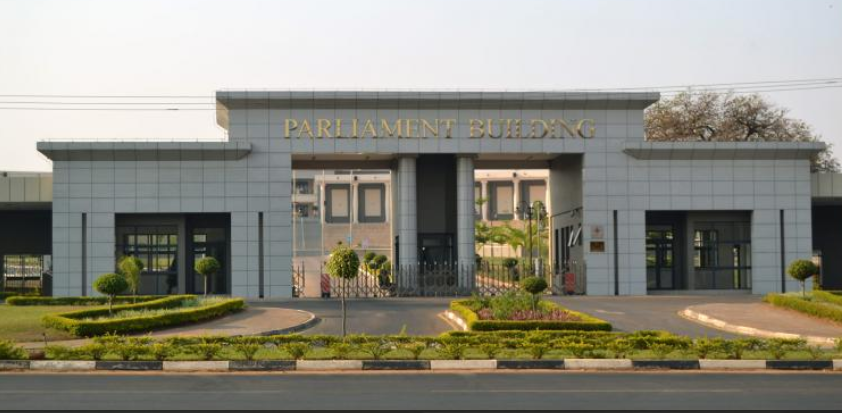
Parliament of Malawi
Parliament Building
Along Presidential Drive
City Centre
P/Bag B362
Lilongwe 3
Malawi
Telephone: +265 1 770 090 / +265 1 774 159 / +265 1 775 959 / +265 1 776 896 / +265 1 788 053
Email: parliament@parliament.gov.mw
Website: parliament.gov.mw
Monitoring
The Centre for Social Accountability and Transparency (CSAT) is a Malawian civil society organisation working to promote transparency, accountability, citizen participation and good governance.
Guoji Dream Town
Area 49, Off Kaunda Road
P.O. Box X209
Lilongwe
Malawi
Telephone: +265 999 311 641
Email: info@csatmw.org