
Why the Mahé Symposium Matters Now
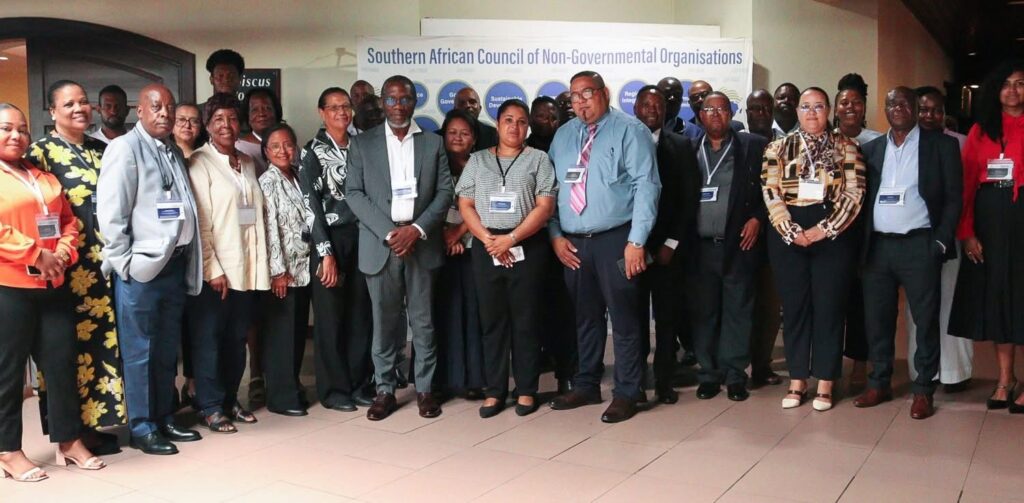
In April 2026 I had the privilege of following the outcomes of the Annual High-Level Stakeholders Symposium held in Mahé, Seychelles. The gathering brought together Member State officials, Non-State Actors, development partners and regional institutions under the theme of strengthening inclusive regional integration through people-centred partnerships. What emerged was not another set of well-intentioned resolutions. It was a clear, time-bound call for accelerated delivery of the RISDP 2020-2030, genuine operationalisation of the SADC Mechanism for Engagement with Non-State Actors, and a stronger role for parliamentary institutions in making regional commitments real for citizens.
As someone who works at the intersection of civil society and parliamentary monitoring in the region, I left the Symposium convinced that the next phase of SADC integration will succeed or fail on one question: whether we move from state-centric processes to structured, predictable, value-driven partnerships that place citizens at the centre. The Symposium’s resolutions on parliamentary engagement and democratic governance give SADC Parliamentary Forum (SADC-PF) both a renewed mandate and a practical entry point.
Context: Progress, Gaps and the Parliamentary Opportunity
The Symposium took place at the midpoint of the RISDP 2020–2030. Participants acknowledged real gains in peace and security, anti-trafficking work, social policy and digital readiness. At the same time, they were frank about the deficits: infrastructure and energy shortfalls, financing constraints, weak data systems, limited inclusion of civil society, and the persistent gap between policy ambition and execution.
A central observation was the under-utilisation of parliamentary institutions. Resolution 4.6 of the Symposium is unambiguous. It calls for support in transforming the SADC Parliamentary Forum into a fully-fledged regional parliament with legislative and oversight powers. It urges national parliaments to strengthen scrutiny of regional treaties and protocols. It prioritises electoral integrity and peaceful transitions. And it demands institutionalised dialogue between parliamentarians and civil society at both national and regional levels.
These are not abstract aspirations. SADC-PF already possesses distinctive institutional assets that few other regional bodies can match: a dedicated Regional Parliamentary Model Laws Oversight Committee (RPMLOC), a formal Regional Women’s Parliamentary Caucus, and a Standing Committee system deliberately aligned to SADC Directorates. The Forum has produced Model Laws on Elections, Child Marriage, Gender-Based Violence and Public Financial Management precisely to help Member States domestic cate regional standards. The Symposium’s emphasis on people centred partnerships and NSA engagement therefore lands on fertile ground. The challenge is to connect the Seychelles resolutions to the day-to-day work of national parliaments and to the Forum’s existing oversight architecture.
I also observed a healthy tension that civil society must navigate carefully. The Symposium strongly supported piloting the SADC Mechanism for Engagement with NSAs, while insisting that it must uphold subsidiarity, sovereignty, transparency, diversity and non-partisanship. For parliamentary monitoring organisations this is both an opportunity and a responsibility. We are being invited into more structured spaces; we must arrive with evidence-based, solution-oriented contributions rather than only critique.
Solutions: Linking Symposium Resolutions to SADC-PF Practice
Three practical pathways emerge from the Symposium that can be advanced immediately through SADC-PF and national parliamentary monitoring work.
First, national parliaments and SADC-PF should treat the operationalisation of the NSA Mechanism as a joint accountability agenda. Resolution 4.3 calls for efficient, rules-based accreditation and stronger national consultative platforms linked to SADC National Committees. Parliamentary committees responsible for foreign affairs, regional integration and justice are well placed to demand regular reports on how their own governments are preparing for, or already implementing, the Mechanism. SADC-PF’s RPMLOC and Standing Committees can request structured briefings from the Secretariat on the pilot phase and ensure that civil society inputs are recorded and tracked.
Second, the push to transform SADC-PF into a regional parliament with legislative and oversight powers must be grounded in concrete domestication work. The Forum’s Model Laws already provide ready-made legislative tools. The Child Marriage Model Law, for example, has driven measurable reforms in Zimbabwe, Malawi and Zambia. The Elections Model Law is the subject of an ongoing regional study with the Electoral Commissions Forum of SADC Countries. Parliamentary monitoring organisations can support national portfolio committees to map the status of each Model Law against domestic statute books, identify remaining customary-law conflicts, and table progressive amendments. This turns the Symposium’s call for stronger parliamentary scrutiny into a practical, measurable work plan.
Third, the Symposium’s insistence on citizen-centred governance requires that traditional leaders, women, youth and informal traders are not treated as afterthoughts. Successful engagement models already exist: Malawi’s Chiefs’ Forums and by-law systems, Zimbabwe’s Shamva District by-laws and “Not in My Village” campaign, and Zambia’s House of Chiefs–Parliament pact.
These approaches show that customary authorities can become partners in ending child marriage and strengthening local accountability when they are given clear roles, capacity support and peer accountability. SADC-PF’s Regional Women’s Parliamentary Caucus and Gender Equality Standing Committee are natural homes for scaling these lessons regionally. Taken together, these pathways convert the Seychelles resolutions from statements of intent into a coherent programme of parliamentary and civil society action.
Way Forward
The remaining years of the RISDP offer a narrow window. Political will, institutional discipline and genuine partnerships will determine whether regional integration delivers tangible improvements in people’s lives or remains a conversation among elites.
I urge three immediate steps. Parliamentary monitoring organisations should request formal briefings from their national SADC National Committees and relevant portfolio committees on the status of NSA Mechanism preparations and Model Law domestication. SAf-CNGO and its members should develop a simple monitoring matrix that tracks the Symposium’s key resolutions against parliamentary and executive action, and present findings at the 2027 AHLSS. Finally, SADC-PF itself should use the next Plenary Assembly to receive a structured report on how Standing Committees and the RPMLOC will support the Symposium’s parliamentary and governance resolutions.
Regional integration will not be measured by the number of meetings we hold. It will be measured by whether a young woman cross-border trader faces fewer barriers, whether a girl is protected from child marriage by both statute and custom, and whether citizens can see and influence the decisions taken in their name. The 2026 Symposium in Seychelles has given us clearer language and stronger political cover. The task now is to turn that language into parliamentary practice.
I invite colleagues across the PEMO network, national umbrellas and SADC-PF structures to share experiences of how they are already linking the Seychelles resolutions to their own oversight and advocacy work. The conversation is open.
Lebogang Mabotho is the Executive Director of the Southern African Council of Non-Governmental Organisations.
Disclaimer: The views, opinions and statements expressed in this article are those of the Author and do not necessarily reflect the views or position of PMG. PMG does not endorse or necessarily agree with any of the opinions or conclusions expressed and has not independently verified all information contained herein. PMG accepts no responsibility or liability for the accuracy, completeness or content of the article, or for any reliance placed on the views or information expressed therein.