
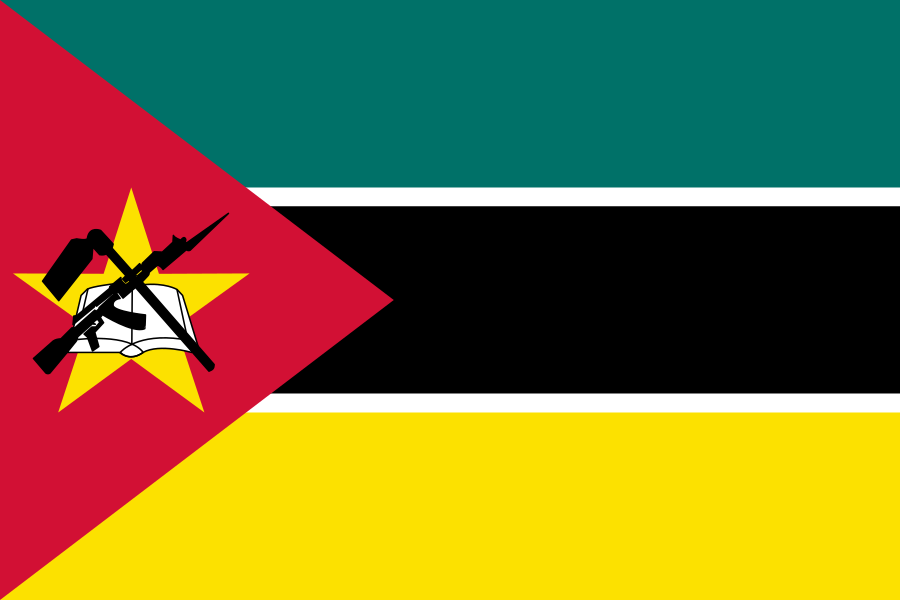
Mozambique
About
In the first half of the second millennium A.D., northern Mozambican port towns were frequented by traders from Somalia, Ethiopia, Egypt, Arabia, Persia, and India. The Portuguese were able to wrest much of the coastal trade from Arab Muslims in the centuries after 1500, and they set up their own colonies. Portugal did not relinquish Mozambique until 1975. Large-scale emigration, economic dependence on South Africa, a severe drought, and a prolonged civil war hindered the country’s development until the mid-1990s.
The ruling Front for the Liberation of Mozambique (FRELIMO) party formally abandoned Marxism in 1989, and a new constitution the following year provided for multiparty elections and a free-market economy. An UN-negotiated peace agreement between FRELIMO and rebel Mozambique National Resistance (RENAMO) forces ended the fighting in 1992. In 2004, Mozambique underwent a delicate transition as Joaquim CHISSANO stepped down after 18 years in office. His elected successor, Armando GUEBUZA, served two terms and then passed executive power to Filipe NYUSI in 2015. RENAMO’s residual armed forces intermittently engaged in a low-level insurgency after 2012, but a 2016 cease-fire eventually led to the two sides signing a comprehensive peace deal in 2019.
Since 2017, violent extremists — who an official ISIS media outlet recognized as ISIS’s network in Mozambique for the first time in 2019 — have been conducting attacks against civilians and security services in the northern province of Cabo Delgado. In 2021, Rwanda and the Southern African Development Community deployed forces to support Mozambique’s efforts to counter the extremist group.
Some key dates in Mozambique’s history:
400BC – 400AD
Bantu-speaking peoples migrate into Mozambique, followed by waves of migration from the west and north in the following centuries.
1000
Indian Ocean trade networks extend as far south into Mozambique, lead to the development of numerous port towns, accompanied by the spread of Islam and a Swahili culture.
1498
Vasco da Gama’s voyage around the Cape of Good Hope marks Portuguese entry into trade, politics, and society of the region.
1500 – 1700
Portuguese capture much of the coastal trade from Arab Muslims.
1698
Arab Muslims seize Portugal’s key foothold on Mombasa Island in Kenya. Subsequently, Mazrui and Omani Arabs reclaim much of the Indian Ocean trade, forcing the Portuguese to retreat south.
19th Century
Lisbon hands over some territories in Mozambique to be ruled by chartered companies like the Mozambique Company.
1880s – 1918
Portugal increases efforts to occupy the interior of the area in the late 19th Century during the so-called “Scramble for Africa”, securing control over most of the territory, despite resistance.
1942
The Mozambique Company relinquishes territories back to Portuguese control, unifying Mozambique under control of the Portuguese government.
1960
Mueda massacre. Unknown number of nationalist demonstrators demanding independence in Mueda are shot dead by troops. This fuels support for those calling for independence.
1962
Mozambique Liberation Front, or Frelimo is formed in Dar es Salaam, Tanzania.
1964 – 1974
Mozambican war of independence. Armed fighting breaks out as a result of frustration among many Mozambicans who see foreign rule as exploitative.
UN pressures Portugal to decolonise. Portugal threatens to withdraw from NATO, halting pressure from within NATO to quit its African colonies. Nationalist groups in Mozambique turn to the Soviet bloc for aid.
1974
Following the Carnation Revolution in Lisbon, the new Portuguese government calls for a ceasefire and talks culminating in the Lusaka Accord, handing over power to Frelimo.
1975
Independence: Frelimo sets up single-party system, leading to civil war.
1977 – 1992
Mozambican civil war between Frelimo government, with support from Cuba and USSR, and anti-communist Mozambican National Resistance (Renamo) rebels, combined with sabotage from the neighbouring states of Rhodesia and South Africa. Over a million people die in the fighting and subsequent famines.
1990
Constitution amended to allow multi-party system.
1992
UN-brokered peace deal ends fighting between Frelimo and the Renamo rebels.
1994
First multi-party elections.
2017
A jihadist insurgency begins in the north, delaying the development of promising offshore gas fields.
Location
South-eastern coast of Africa, bordering the Mozambique Channel in the Indian Ocean in west.
Area
801,590 km² (309,495 sq. mi.)
Total
799,380 sq km
Land
786,380 sq km
Capital
Maputo
Land boundaries
4,783 km.
Land border countries (6)
Malawi 1498 km; South Africa 496 km; Eswatini 108 km; Tanzania 840 km; Zambia 439 km; Zimbabwe 1,402 km
Coastline
2,470 km
Border countries
Madagascar, Malawi, South Africa, Swaziland, Tanzania, Zambia, Zimbabwe
Water
13,000 sq km
Terrain
Varies from coastal lowlands to high plateau in northwest, mountains in west.
Climate
Varies from sub-tropical to tropical (south to north).
Mozambique lies largely within the tropics, and much of the coastline is subject to the regular seasonal influence of the Indian Ocean monsoon rains. The monsoon influence is strongest in the northeast but is modified somewhat in the south by the island barriers of Madagascar, the Comoros, and the Seychelles. With the exception of highland areas on the northern and western borders and around Gurue (east of the Malawi protrusion into Mozambique), where elevation modifies both temperature and humidity, the climate is seasonal and tropical.
Population: Approximately 36.8 million (2026 estimate).
Capital: Maputo.
Official language: Portuguese.
Major languages: Emakhuwa, Xichangana (Tsonga), Elomwe, Cisena and other Bantu languages.
Administrative divisions: 11 provinces (including Maputo City).
2025
Transparency: 48
Public Participation:13
Oversight: 41
Source: International Budget Partnership
| Transparency International Corruption Perceptions Index (2025): • Score: 20/100 • Global ranking: 161 of 182 countries. Within Sub-Saharan Africa, Mozambique is among the lowest-performing countries on the CPI. Source: Transparency International |
Ranked 22nd in 2025.
Source: Open Parliament Index
- Open Government Partnership member: Mozambique is not an OGP member, does not have an OGP National Action Plan or OGP commitments, however Mozambique does have several laws and constitutional provisions that align with open government principles, particularly regarding access to information, transparency, accountability, and public participation.
- Access to Information legislation: Mozambique adopted the Right to Information Law (Law No. 34/2014), which provides a legal right of access to public information.
- Constitutional Right to Information: The Constitution of the Republic of Mozambique guarantees freedom of expression, access to information and citizen participation.
- Public Sector Transparency: Public procurement is Governed by Mozambique’s public procurement regulations under the Ministry of Economy and Finance. Public tenders are published through the national procurement system.
- Public financing/political party financing: Political party financing is regulated under electoral and political party legislation, with oversight by the electoral authorities.
- Asset disclosure: Senior public officials are required to declare assets under Mozambique’s anti-corruption framework, administered through the Central Office for Combating Corruption and other oversight institutions, although implementation and public accessibility remain limited.
Capital
Maputo (formerly Lourenço Marques during Portuguese colonial rule; renamed Maputo following independence in 1975)
Independence
25 June 1975 (from Portugal)
Constitution
History: several previous; latest adopted 16 November 2004 and entered into force 21 January 2005, replacing the 1990 Constitution. It was amended and republished by Law No. 1/2018 of 12 June 2018; a further amendment was adopted in 2023 by Law No. 11/2023 of 23 August 2023. RRefworld+1
Amendments: proposed amendments require approval by at least two-thirds of the members of the Assembly of the Republic; amendments concerning certain fundamental provisions, including the independence and sovereignty of the State, fundamental rights and freedoms, the republican form of government, political pluralism, and judicial independence, must be submitted to a referendum. The Constitution generally may only be amended five years after the entry into force of the previous amendment, unless the Assembly exercises extraordinary amendment powers by a three-quarters majority; constitutional amendments cannot be adopted during a state of siege or state of emergency.
Legal system
Civil-law system based primarily on Portuguese law and influenced by the Roman-Germanic legal tradition; Mozambique also recognizes legal pluralism, allowing customary and other normative and dispute-resolution systems to coexist with the formal legal system where they are consistent with the Constitution.
Mozambique has not submitted an ICJ jurisdiction declaration accepting the compulsory jurisdiction of the International Court of Justice under Article 36(2); signed the Rome Statute of the International Criminal Court on 28 December 2000 but has not ratified it and is therefore not an ICC State Party.
Parliament
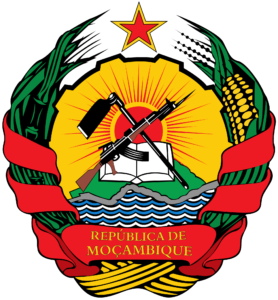
Unitary presidential republic (often classified as a presidential-parliamentary system). The President serves as both Head of State and Head of Government.
President: Daniel Francisco Chapo.
The President is directly elected for a five-year term and appoints the Council of Ministers (Cabinet).
The current Presidential term commenced 15 January 2025 (new term following the 2024 general election).
Parliament: Assembly of the Republic of Mozambique (Assembleia da República).
• Type: Unicameral.
• Seats: 250 members.
• Term: Five years.
• Speaker: Margarida Adamugy Talapa (since January 2025).
| Mozambique has an independent judiciary established under the Constitution. Highest court: Supreme Court of Mozambique (Tribunal Supremo). The judicial system also includes the Constitutional Council, Administrative Court, provincial courts and district courts. In 2026, the government launched a long-term Justice and Rule of Law Reform Pact (2026–2046) aimed at strengthening judicial independence and access to justice. Sources: Landmark Pact to Drive Justice Sector Reform |
Endereço: Assembleia da República (AP) | Av 24 de Julho, Nº 3773, Caixa Postal 1516 – Maputo
Contacto: Tel: +258-21-255 100 | Fax: +258-21-400711
E-mail: ar@parlamento.mz
Website: https://www.parlamento.mz/
Monitoring

Joint – League For NGOs in Mozambique
JOINT is a non-profit organization, with legal personality, financial and asset autonomy, created in 2007 and made official in 2008, with the aim of strengthening the role of Mozambican civil society and its participation in the country’s socio-economic processes and development.
VISION
Connect and strengthen civil society institutions with a view to improving collective action for the common good and dialogue with the Government and the Public Sector.
MISSION
An active Civil Society, engaged and committed to the quality and effectiveness of its actions in favor of social inclusion, socioeconomic development and well-being.
In the context of strengthening the intervention capacity of Civil Society Organizations in Mozambique, JOINT operates based on the following specific objectives:
1. Promotion and connection of CS actors engaged in defending citizenship rights and freedoms;
2. Sharing and disseminating information about the dynamics and manifestations of SC among members and other development actors;
3. Promoting and strengthening the capabilities of its members with a view to their long-term sustainability;
4. Promotion of a culture of open dialogue, cooperation, and coordination between its members and the Government; as well as with donors and other institutions involved in the country’s development programs;
5. Representation and defense of members’ points of view before institutions and decision-making bodies;
6. Development of regional and international cooperation with similar organizations, within the framework of the solidarity of the peoples of the world region;
7. Contribution to the consolidation of peace and socio-economic development of Mozambique.
CONTACT
Rua da Nachingwea Nr. 568 – Polana Cimento A, Moçambique – Maputo
+258 21 42 31 57
+258 84 554 463
info@joint.org.mz