
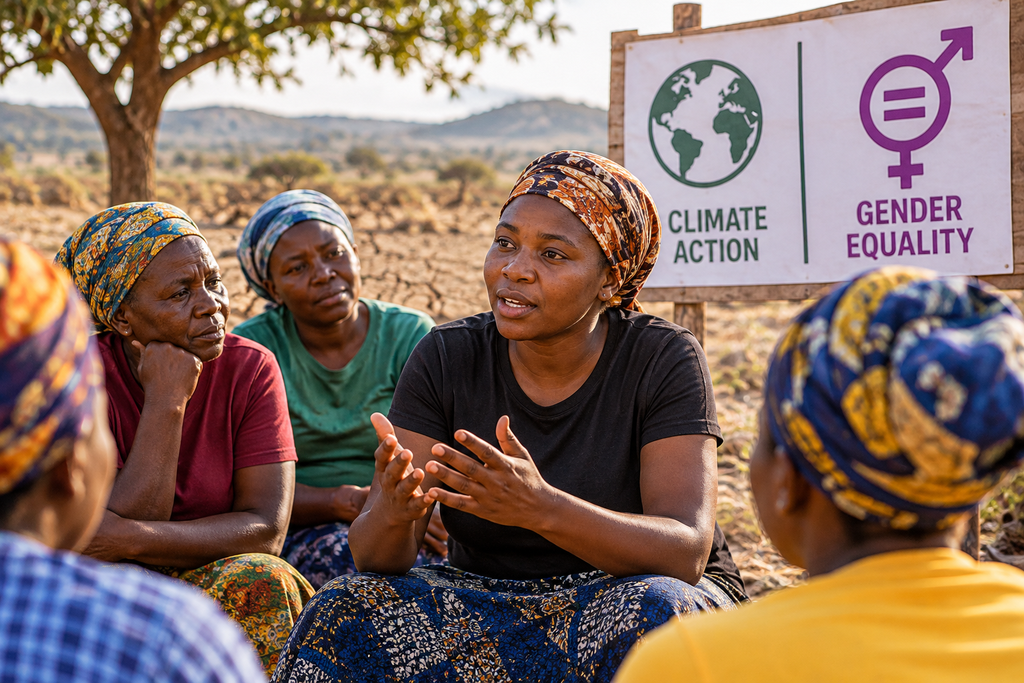
Beyond Commitments: The Struggle to Turn Climate Action and Gender Equality into Reality in Southern Africa
November is a significant month on the global calendar, with the 31st United Nations Climate Change Conference (COP31) taking place in Antalya, Türkiye, from 9 to 20 November, while attention also turns to the annual campaign to end gender-based violence (GBV), which culminates in the 16 Days of Activism from 25 November to 10 December. Against this backdrop, this piece examines developments across the Southern African Development Community (SADC) region, taking stock of the initiatives, commitments and interventions aimed at addressing gender-based violence and addressing climate change.
Across Southern Africa, governments have adopted laws, policies and regional commitments to address climate change and GBV. Yet, for millions of people, the promise of these commitments remains distant. Civil society perspectives from across the region reveal a common challenge: turning political promises into tangible change.
Southern Africa is at an important crossroads. From increasingly severe droughts and floods to persistent gender inequality and violence against women and girls, the region faces challenges that demand more than political declarations and legislative reforms. They require sustained investment, effective institutions, meaningful public participation and, above all, accountability.
A survey of civil society organisations across the SADC region reveals both progress and persistent shortcomings in two critical areas: climate change governance and the prevention of GBV. The experiences shared by organisations in South Africa, Zambia, Zimbabwe, Mauritius, the Democratic Republic of Congo (DRC), Tanzania, Madagascar, Lesotho, Namibia and Angola paint a picture of countries moving at different speeds, but confronting remarkably similar implementation challenges.
The findings suggest that the region does not necessarily lack policies, laws or commitments. Rather, the challenge lies in ensuring that these frameworks are adequately financed, effectively implemented and responsive to the realities of the communities they are intended to protect.
1. Climate change: Beyond legislation to meaningful climate action
Climate change is no longer a distant environmental concern for Southern Africa. It is an immediate development, economic and human security challenge. Droughts, floods, cyclones, changing rainfall patterns, biodiversity loss and water insecurity are threatening livelihoods, food production and economic stability across the region.
For many communities, particularly smallholder farmers, rural households and people dependent on natural resources, climate change is already a lived reality.
Yet the survey reveals significant differences in how SADC countries are responding through legislation, institutional arrangements and climate financing.
South Africa and Zambia have taken important legislative steps. South Africa’s Climate Change Act (Act No. 22 of 2024) establishes a framework for coordinating climate action across national, provincial and local government, strengthening climate resilience and reducing greenhouse gas emissions. However, implementation remains at an early stage, with some provisions awaiting supporting regulations.
Similarly, Zambia’s Green Economy and Climate Change Act No. 18 of 2024 represents an important step towards strengthening the country’s climate governance framework. However, civil society respondents raised concerns that the legislation has not yet been sufficiently popularised. This highlights an important weakness in climate governance: passing legislation is only the beginning. Citizens, communities and implementing institutions must understand what the law provides and how they can participate in its implementation.
Zimbabwe has also strengthened its climate governance framework through the Climate Change Management Act (Act No. 8 of 2026). Civil society organisations reported opportunities to influence climate policy through the Alternative Mining Indaba, government-led consultations, the People’s COP and engagements around preparations for COP31. These platforms demonstrate the importance of creating spaces where community experiences and civil society recommendations can inform national negotiating positions.
However, the existence of consultation opportunities does not automatically guarantee meaningful influence. The critical question is whether governments demonstrate how public contributions have shaped final policies and decisions.
Other countries face different legislative and institutional circumstances. Mauritius relies on its Paris Agreement commitments and broader climate governance frameworks, while its civil society organisations are advocating for greater investment in coastal protection, marine ecosystems, mangrove restoration and coral reef conservation. In the DRC, environmental protection legislation and emerging carbon market regulations provide an important foundation, but questions remain about community consultation, transparency and the equitable sharing of benefits from carbon-related initiatives.
Tanzania has strengthened its Environmental Management Act through amendments in 2025, while supporting implementation through its National Climate Change Response Strategy and National Adaptation Plan. Nevertheless, institutional coordination, local government capacity and financing remain important challenges.
In Lesotho, climate action is guided by existing policy and environmental frameworks, including the National Climate Change Policy (2017–2027) and the Environment Act of 2008. Yet civil society participation remains intermittent, while the country continues to face challenges in accessing adequate climate finance.
Namibia’s experience similarly illustrates the gap between policy commitments and deliberate financing. Its civil society respondents highlighted the need to prioritise drought mitigation and the protection of livelihoods in a country particularly vulnerable to water scarcity.
Angola’s experience raises another concern: even where environmental legislation exists, weak enforcement can undermine its effectiveness, particularly in the extractive industries. Madagascar, meanwhile, continues to rely on broader environmental laws and policies rather than a dedicated climate change law, with civil society advocating for a more coherent national climate framework.
These experiences demonstrate that there is no single legislative pathway for addressing climate change. However, they point to a shared regional imperative: stronger implementation, institutional accountability and accessible financing.
The climate finance question
Perhaps the most consistent concern emerging from the survey is the difficulty of mobilising and accessing adequate climate finance.
Across the region, civil society organisations are calling for increased, predictable and accessible funding, particularly for adaptation and community resilience.
South Africa provides an important example of efforts to mobilise climate-related financing through its Just Energy Transition Plan and Climate Change Response Fund. These initiatives offer opportunities to support the transition towards cleaner energy, strengthen resilience and respond to climate-related disasters. However, the transition must also address the needs of coal-dependent communities, protect livelihoods, create decent employment and ensure affordable access to electricity.
In Zambia, the establishment of the Climate Finance Unit under the Ministry of Finance and National Planning in March 2026 represents an important institutional development. Nevertheless, civil society continues to advocate for simplified funding procedures and increased public financing for vulnerable communities.
Zimbabwe’s climate finance frameworks and engagement with international mechanisms also demonstrate progress in mobilising resources. However, questions remain about the transparency of allocations, actual disbursements and whether vulnerable communities benefit meaningfully.
Mauritius is advocating for climate financing that does not deepen public debt through excessive reliance on loans. Its civil society organisations argue that funding should reach vulnerable coastal communities, small-scale farmers and households that cannot afford the costs of the renewable energy transition.
The DRC’s experience highlights another dimension: climate finance must not only protect forests and generate carbon revenues but also recognise the rights of local communities and Indigenous Peoples. Transparent consultation and equitable benefit-sharing are essential.
Tanzania has accessed mechanisms including the Green Climate Fund and Adaptation Fund, while Lesotho has benefited from international climate financing through the Global Environment Facility and other mechanisms. However, both countries continue to face challenges in ensuring that funding reaches local institutions and vulnerable communities.
The SADC regional perspective reinforces these concerns. The regional survey identifies the need to scale up predictable, grant-based adaptation finance, operationalise the Global Goal on Adaptation through clear indicators and simplify access to the Loss and Damage Fund.
The message is clear: climate finance must move beyond international pledges and become accessible resources that produce measurable improvements in people’s lives.
Parliament and civil society must play a stronger role
An important finding from the survey is the need to strengthen parliamentary accountability for climate action.
While South Africa’s parliamentary rebuilding plans following the 2022 fire incorporated green building principles, civil society respondents noted that there is still no confirmation that proposed sustainability measures, including carbon-footprint monitoring, energy and water efficiency targets and annual environmental audits, have been fully implemented.
In Zambia, respondents were similarly unaware of a publicly known National Assembly environmental sustainability strategy.
Zimbabwe’s experience points to a similar opportunity for Parliament to adopt a green institutional strategy covering renewable energy, waste management, water conservation and reduced paper consumption.
These examples raise an important question: how can legislatures effectively hold governments accountable for environmental commitments if they have not established clear sustainability practices within their own institutions?
Parliaments must lead by example through sustainable institutional management, effective oversight of climate budgets and scrutiny of implementation.
Civil society participation is equally important. Although countries such as South Africa, Zambia, Zimbabwe and Tanzania provide opportunities for stakeholder consultations, the quality and consistency of engagement vary considerably. In other countries, including Angola and Namibia, respondents described limited or sporadic opportunities for civil society to influence climate policy.
The region must therefore move towards more structured and transparent participation, ensuring that women’s organisations, youth movements, community-based organisations, Indigenous Peoples and vulnerable communities are not merely consulted but actively involved in shaping climate decisions.
Ultimately, climate action must be judged not by the number of laws adopted or international meetings attended, but by whether communities are better protected against climate risks.
2. Gender-based violence: When legal protection does not guarantee justice
Gender-based violence remains one of Southern Africa’s most persistent human rights and development challenges. Despite important legislative and policy advances, women and girls continue to experience domestic violence, sexual violence, economic abuse, harmful cultural practices and other forms of gender-based discrimination.
The survey reveals that most participating countries have established some form of legal or policy framework addressing GBV. However, significant gaps remain between formal protection and the actual experiences of survivors.
South Africa’s constitutional framework provides a strong foundation for gender equality and protection from violence. The country has developed an extensive legislative and institutional response, including domestic violence and sexual offences legislation, alongside specialised support services.
However, civil society respondents highlighted persistent weaknesses in enforcement, coordination, accountability and equal access to services across rural and urban communities. This reinforces a familiar concern: strong legislation does not necessarily translate into effective protection when institutions lack the capacity and resources to implement it.
Zambia has also made legislative progress through its Anti-Gender-Based Violence Act, which provides for stronger penalties for convicted offenders and establishes provisions for shelters for survivors. Nevertheless, respondents raised concerns about the availability of shelters, meaningful access to services and the need to harmonise the GBV Act with other legislation, including the Penal Code.
Of particular concern is the inadequate resourcing of institutions responsible for implementation, including police gender desks.
Zimbabwe has established an important legal and policy framework through its Constitution, Domestic Violence Act, Criminal Law (Codification and Reform) Act and National Strategy to Prevent and Address Gender-Based Violence (2023–2030).
These measures provide a foundation for prevention, protection and accountability. However, civil society highlighted inadequate funding, limited institutional capacity, weak coordination and barriers to accessing justice, particularly for survivors in rural communities.
In the DRC, the legal framework comprises several important instruments addressing sexual violence, discrimination and survivor protection. These include the 2006 laws on sexual violence and criminal procedure, as well as more recent legislation strengthening protection, legal assistance and integrated services for survivors.
The country has also established integrated multisectoral services to support survivors. Nevertheless, fragmented legislation, limited institutional capacity, inadequate resources and weak access to justice continue to undermine implementation.
Mauritius presents a different but equally important challenge. Its legal framework provides for relatively rapid court intervention, protection orders and access to legal assistance. Digital filing mechanisms have also helped improve access to interim protection.
However, civil society highlighted a serious shortage of long-term transitional housing for survivors. Many women remain economically dependent on abusive partners and may be forced to return to abusive households because they cannot afford independent accommodation.
This illustrates why legal protection must be accompanied by economic empowerment, housing and sustainable social support.
Tanzania has established police gender and children’s desks, One Stop Centres and legal aid mechanisms, supported by its National Plan of Action to End Violence Against Women and Children (2024/25–2028/29).
However, gaps remain in domestic violence protection, access to justice, survivor support and the legal treatment of issues such as marital rape and child marriage. Rural women and economically marginalised survivors face additional barriers.
Lesotho’s Counter Domestic Violence Act, 2022, provides an important foundation by recognising different forms of abuse, including physical, sexual, emotional, psychological and economic violence. Yet limited resources, delays in court proceedings and inadequate survivor services remain significant challenges, particularly in remote and mountainous communities.
In Namibia, civil society highlighted prolonged court processes, limited legal aid and weak coordination among institutions. Angola’s experience similarly demonstrates how inadequate public funding can undermine the implementation of otherwise important gender equality policies.
Madagascar has adopted legislation addressing GBV, including Law No. 2019-008, which provides for penalties, prevention and survivor protection. However, civil society raised concerns that many cases remain unreported or undocumented, particularly in remote and isolated communities where reporting mechanisms are weak.
Taken together, these experiences demonstrate that the region’s challenge is not simply the absence of laws. It is the failure to ensure that every survivor can access protection, justice and the support needed to rebuild their life.
The SADC Model Law: An opportunity for stronger regional protection
The SADC Model Law on Gender-Based Violence provides an important regional benchmark for strengthening national legislation and promoting comprehensive, survivor-centred responses.
Survey findings indicate that the Model Law has been useful in informing advocacy and legislative reform in several countries, although its influence varies.
In Zambia, respondents identified the consideration of aggravating circumstances in sentencing perpetrators as an example of a standard reflected in national legislation.
Zimbabwe’s legal framework contains provisions consistent with several principles of the Model Law, including protection against domestic violence, sexual offences and child marriage. However, civil society emphasised that a comprehensive assessment is still needed to establish the extent of formal alignment.
The DRC similarly recognises the Model Law as an important reference for harmonising legislation, strengthening survivor protection and improving access to justice. However, existing national provisions should not automatically be interpreted as direct adoption of the regional instrument.
In Mauritius, the Model Law is viewed as a useful advocacy tool, but its non-binding nature means that national reforms remain dependent on domestic political priorities.
South Africa’s experience is also instructive. Civil society respondents indicated that the Model Law has had limited demonstrable direct influence on national legislative reforms, partly because the country already had established domestic violence and sexual offences legislation. National reform has largely involved strengthening existing laws rather than adopting the regional model wholesale.
This distinction matters. Regional model laws are not intended to replace national legislative processes. Their value lies in providing common standards, identifying gaps and encouraging countries to strengthen their domestic protections.
The broader SADC findings highlight continuing fragmentation in national legislation, weak enforcement, inadequate survivor support and insufficient investment in prevention. The existence of similar legal provisions across countries does not necessarily mean that the Model Law has been formally domesticated.
A systematic review of national legislation against the Model Law would help identify remaining gaps and establish clearer priorities for reform.
Beyond punishment: Investing in prevention and survivor support
One of the strongest messages emerging from the survey is that addressing GBV requires more than increasing penalties for perpetrators.
While effective criminal justice responses are essential, governments must also invest in prevention, community education, economic empowerment and accessible survivor services.
Zambia’s respondents highlighted the importance of economic empowerment for women, young people and persons with disabilities, as well as witness protection and relocation programmes.
Mauritius emphasised the need to combine survivor support with vocational training, access to finance and employment opportunities to reduce economic dependence on abusive partners.
Zimbabwe and the DRC called for stronger legal aid, safe houses, psychosocial support and improved access to justice. Lesotho and Namibia emphasised the need to strengthen frontline institutions and ensure that survivors in remote communities are not excluded from protection.
Madagascar highlighted the importance of challenging harmful traditional practices and strengthening reporting mechanisms. Meanwhile, South Africa’s experience reinforces the need for better coordination between institutions, effective enforcement and equitable access to survivor services.
At the regional level, governments must also recognise the importance of prevention. Community education, school-based programmes, engagement with traditional and religious leaders, and the involvement of men and boys are essential to challenging harmful gender norms.
The SADC Model Law should therefore be treated as more than a legislative reference. It should be a foundation for a regional commitment to prevention, protection, access to justice and accountability.
Conclusion: The real measure of progress is implementation
The experiences shared by civil society organisations across Southern Africa reveal an important contradiction. Governments have made significant commitments to climate action and gender equality, yet the implementation of these commitments remains uneven.
In climate governance, the region needs stronger legislation, accessible financing, transparent institutions and meaningful community participation. In addressing gender-based violence, it needs enforceable laws, adequately funded survivor services, accessible justice systems and sustained investment in prevention.
South Africa, Zambia, Zimbabwe, Mauritius, the DRC, Tanzania, Madagascar, Lesotho, Namibia and Angola each offer important lessons. Their experiences demonstrate that progress is possible, but that legislation alone cannot deliver lasting change.
There is also a clear role for civil society. Organisations working at community level are often best placed to document emerging challenges, support vulnerable populations, identify implementation failures and hold public institutions accountable. Their participation must therefore extend beyond occasional consultations to meaningful involvement in policy development, budgeting, implementation and monitoring.
For SADC, the opportunity is to strengthen regional cooperation, encourage peer learning and translate shared commitments into measurable national action.
Ultimately, the success of Southern Africa’s climate and gender equality commitments will not be determined by how many laws are passed or policies adopted. It will be determined by whether communities are more resilient, women and girls are safer, survivors can access justice, and public institutions are held accountable for delivering on their promises.
That is the difference between making commitments and making change.