
Introducing Open House: Connecting Citizens, Civil Society and Parliaments Across Southern Africa
The Parliamentary Monitoring Group (PMG) has launched Open House, a new regional initiative focused on parliamentary openness and engagement across Southern Africa.
The initiative brings together PMG’s experience in parliamentary monitoring with a regional focus on how citizens and civil society can better understand, access and engage with parliamentary institutions. Through its work with civil society organisations and parliaments across the Southern African Development Community (SADC), Open House aims to support greater openness, transparency and participation in parliamentary processes.
At the centre of the initiative is the idea of “People’s Parliaments”, legislatures that are open, accountable and answerable to the people who elected them.
Why Open House?
Parliaments make decisions that affect citizens across the region, but understanding how these institutions work and finding opportunities to engage with them is not always straightforward. Open House focuses on making parliamentary work and developments more accessible, while supporting civil society organisations and networks that monitor and engage with legislatures.
Its work covers a range of areas, including citizen engagement with national, subnational and regional parliaments, access to parliamentary information, assessing parliamentary performance, oversight and anti-corruption reforms, while providing opportunities for organisations involved in parliamentary monitoring to learn from one another.
The initiative also places emphasis on collaboration. Rather than looking at parliamentary monitoring as an isolated activity, Open House brings together civil society organisations and parliamentary stakeholders from across the region to share experiences, identify good practice and strengthen engagement.
Why the regional focus matters
Southern Africa is experiencing important developments in its regional parliamentary institutions.
A key development highlighted in the SAf-CNGO SADC Parliament Monitoring Report for April–July 2026 is the continuing transition from the SADC Parliamentary Forum to a fully-fledged SADC Parliament. The process has been underway for several years, with SADC Heads of State and Government formally agreeing in 2021 to transform the Forum into a consultative and deliberative SADC Parliament. The Agreement amending the SADC Treaty to establish the SADC Parliament was adopted in 2022 and entered into force on 11 July 2024 following the 12th signature. By August 2025, all 15 SADC Parliamentary Forum Member States had endorsed the Agreement.
The transition is not yet complete. As of July 2026, the institution continued to operate as the SADC Parliamentary Forum (SADC-PF), while the Draft Protocol setting out the operational modalities of the future SADC Parliament remained under technical revision. Issues still requiring attention include the finalisation and adoption of the Protocol, rules and procedures for the new Parliament, financial and human-resource arrangements, and its relationship with other SADC institutions.
The development of a regional parliament has important implications for how citizens and civil society engage with regional decision-making.
The SAf-CNGO report identifies strengthening citizen voice in regional integration, enhancing parliamentary oversight of SADC programmes and providing a formal platform for dialogue on regional policy as important potential implications of the transition. Civil society organisations have also called for explicit provisions guaranteeing CSO observer status and structured engagement, greater transparency around the future Parliament’s financial and administrative arrangements, and openness standards aligned with the principles measured by the Africa Open Parliament Index.
These developments underline the importance of organisations that are able to follow regional parliamentary processes, communicate developments and support civil society engagement. They also highlight the need to strengthen national Parliamentary Engagement and Monitoring Organisation (PEMO) networks so that civil society is prepared to engage with the future SADC Parliament once it becomes operational.
Following opportunities for engagement
Open House’s focus on citizen and civil society engagement is particularly relevant as regional parliamentary processes develop.
There are a number of existing opportunities for public and civil society engagement with the SADC Parliamentary Forum. These include participation in Standing Committee sessions and joint sittings, Model Law consultation processes, engagement through national Parliamentary Engagement and Monitoring Organisations (PEMO) networks, and following Plenary Assembly outcomes through official communiqués and livestreams where available.
Recently, stakeholders participated in a Johannesburg consultation on the SADC Model Law on Constitutionalism and the Rule of Law. A Joint Session of Standing Committees was also held in Johannesburg in May, focusing on the implementation and domestication of SADC protocols relating to democratic and inclusive governance.
The May session included validation of the SADC Model Law on Prison Oversight and discussions on the SADC-PF Sexual Harassment Policy. At the same time, the Regional Parliamentary Model Laws Oversight Committee continued to monitor the domestication of existing Model Laws, including those addressing elections, child marriage, gender-based violence, public financial management and HIV and AIDS.
These developments demonstrate why regional parliamentary monitoring and access to reliable information matter.
Looking across the SADC region
Open House takes a regional approach, with the website providing a country focus covering 16 SADC countries: Angola, Botswana, Comoros, the Democratic Republic of Congo, Eswatini, Lesotho, Madagascar, Malawi, Mauritius, Mozambique, Namibia, Seychelles, South Africa, Tanzania, Zambia and Zimbabwe.
The website also provides information on SADC, the Pan African Parliament and theirparliamentary structures, alongside news and blog content that will contribute to understanding parliamentary developments across the region.
Strengthening civil society networks
Open House is also about the organisations actively monitoring parliamentary engagement.
The project works closely with the Southern African Council of NGOs (SAf-CNGO), the regional umbrella body for national associations of non-governmental organisations operating across the 16 SADC countries. Open House is also part of the Africa Parliamentary Monitoring Organisations Network (APMON), which brings together civil society organisations and coalitions monitoring and engaging with parliaments at national, subnational and regional levels across Africa.
PEMO networks across the SADC region continue to expand through the OPEN Southern Africa project and APMON, although there are ongoing challenges, including differences in organisational capacity between countries, limited formal access to SADC Parliamentary Forum processes and resource constraints affecting sustained monitoring. SAf-CNGO’s regional convening role is important for coordination and knowledge-sharing between organisations working on parliamentary monitoring and engagement.
Strengthening networks between organisations is therefore an important part of creating sustained capacity for parliamentary monitoring and engagement across the region.
Open House is also connected to wider continental work on parliamentary openness.
The 5th Africa PEMO Conference was held in Pretoria, South Africa in September 2025 and co-hosted by PMG and SAf-CNGO. The conference launched the second edition of the Africa Open Parliament Index, which assessed 33 African national parliaments against measures including transparency, civic participation and public accountability.
The Index provides a useful benchmark for thinking about openness and accountability in parliamentary institutions, including the importance of ensuring that the future SADC Parliament develops strong standards for transparency, civic participation and accountability.
This regional and continental network provides opportunities to share experiences and approaches to parliamentary monitoring while drawing attention to developments in individual countries and across regional institutions.
Measuring Parliamentary Openness: The Africa Open Parliament Index
How open is your Parliament to the people it represents? The Africa Open Parliament Index (OPI) is well positioned to answer this question by assessing parliamentary openness across three key areas: transparency, civic participation and public accountability.
The OPI is a collaborative initiative of the Africa Parliamentary Monitoring Organisations Network (APMON) and parliamentary monitoring organisations across the continent, with the Parliamentary Monitoring Group (PMG) previously contributing to the development of the Index from its first edition.
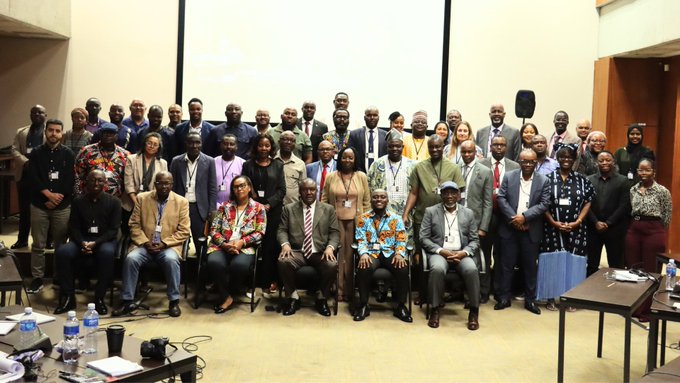
In September 2025, the second edition of the OPI was launched during the 5th Africa Parliamentary Engagement and Monitoring Organisations (PEMO) Conference, held at the University of Pretoria in South Africa. The conference was organised by APMON and co-hosted by the country representative, the Parliamentary Monitoring Group, and brought together representatives from parliamentary monitoring organisations, civil society, parliaments and other stakeholders from across the continent.
The second edition expanded the Index to assess 33 national parliaments across Africa, providing comparative evidence on how legislatures perform in areas of transparency, civic participation and public accountability.
The top 10 countries ranked in the 2025 Open Parliament Index are:
| Rank | Country | Overall score |
| 1 | South Africa | 79.69% |
| 2 | Ghana | 77.60% |
| 3 | Kenya | 73.96% |
| 4 | Zambia | 73.44% |
| 5 | Sierra Leone | 72.40% |
| 6 | Seychelles | 69.79% |
| 7 | Uganda | 76.71% |
| 8 | Tanzania | 67.19% |
| 9 | Rwanda | 66.15% |
| 10 | Malawi | 65.10% |
Africa Open Parliament Index Second Edition
Africa Open Parliament Index Second Edition (French and Portuguese)
Three key findings
1. South Africa ranked first in Africa.
South Africa’s Parliament was ranked the most open parliament in Africa, with an overall score of 79.69%, followed by Ghana at 77.60% and Kenya at 73.96%. [Source: 2025 Africa Open Parliament Index]
2. Public participation remains a significant gap.
While the Index found improvements in many countries previously surveyed, opportunities for public participation remain limited, highlighting the need for parliaments to create stronger avenues for citizens to actively and directly engage in parliamentary processes.
3. Digital access is improving, but openness goes beyond information access.
The Index found that most parliaments make use of digital websites that are accessible to members of the public, while country-level findings also show progress in areas such as the establishment of digital platforms, access to parliamentary information and the publication of proceedings. However, gender-related concerns raised by citizens remain an area requiring further attention by Parliament’s.
For the Open House Project, the OPI is particularly relevant because it reflects the work we are involved in to strengthen open, accessible and accountable parliaments across Southern Africa. By measuring parliamentary openness and identifying gaps, the Index provides civil society organisations and legislatures with evidence that can support dialogue, reform and stronger citizen engagement.
The OPI is more than a ranking; it is a tool for understanding where parliaments are open, where gaps remain, and what can be done to bring citizens and legislatures closer together. CSOs and citizens can use the OPI to monitor their parliaments, engage with them on areas of concern, advocate for improvements and contribute to stronger Open Parliaments. Continued engagement with the Index can also help inform future editions and support better results over time.
Explore Open House
The new Open House website brings this work together in one place. Visitors to the site can explore the country-focused content, learn more about SADC and its parliamentary structures, and follow news and analysis relating to parliamentary developments across Southern Africa.
As regional parliamentary institutions continue to develop, the need for informed monitoring, meaningful engagement and accessible information remains important.
Open House provides a space for following these developments and for connecting the work of civil society organisations, parliamentary monitoring organisations and parliaments across the region.